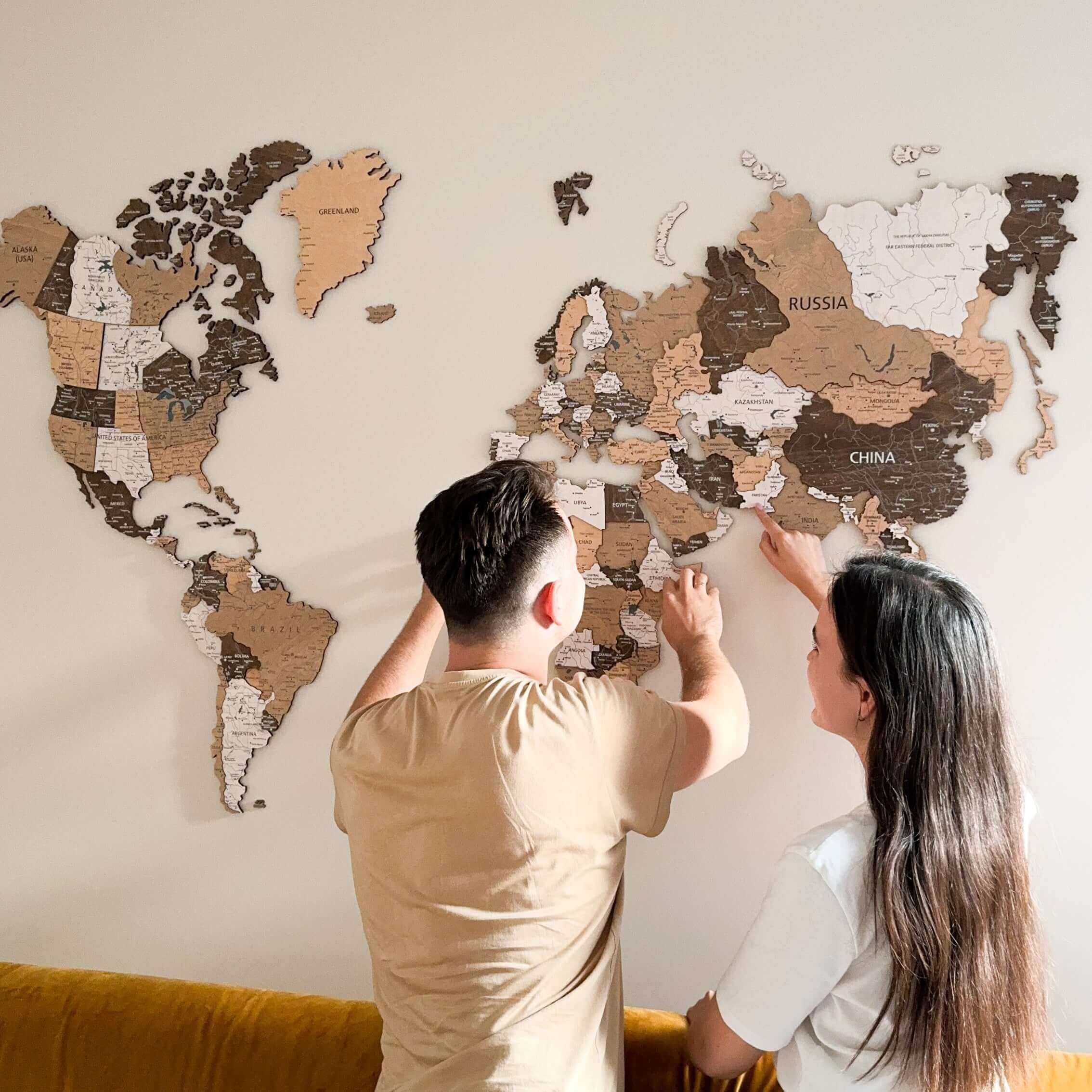
A wooden world map may look like one finished piece when it is hanging on the wall. But behind every KokoBolo map there is a long process of design, preparation, finishing, printing, cutting, checking, and packing.
We make wooden world maps for people who care about details. That means every part of the process matters: the wood, the surface, the oil finish, the printing quality, the map design, the 3D layers, the small islands, and even the way the map creates a shadow on the wall.
This is a behind-the-scenes look at how our wooden world maps are made.
It starts with the map design
Before we touch the wood, we work on the map itself.
A wooden world map is not just a decoration in the shape of continents. For us, it should feel like a real map that has been carefully designed for a wooden surface.
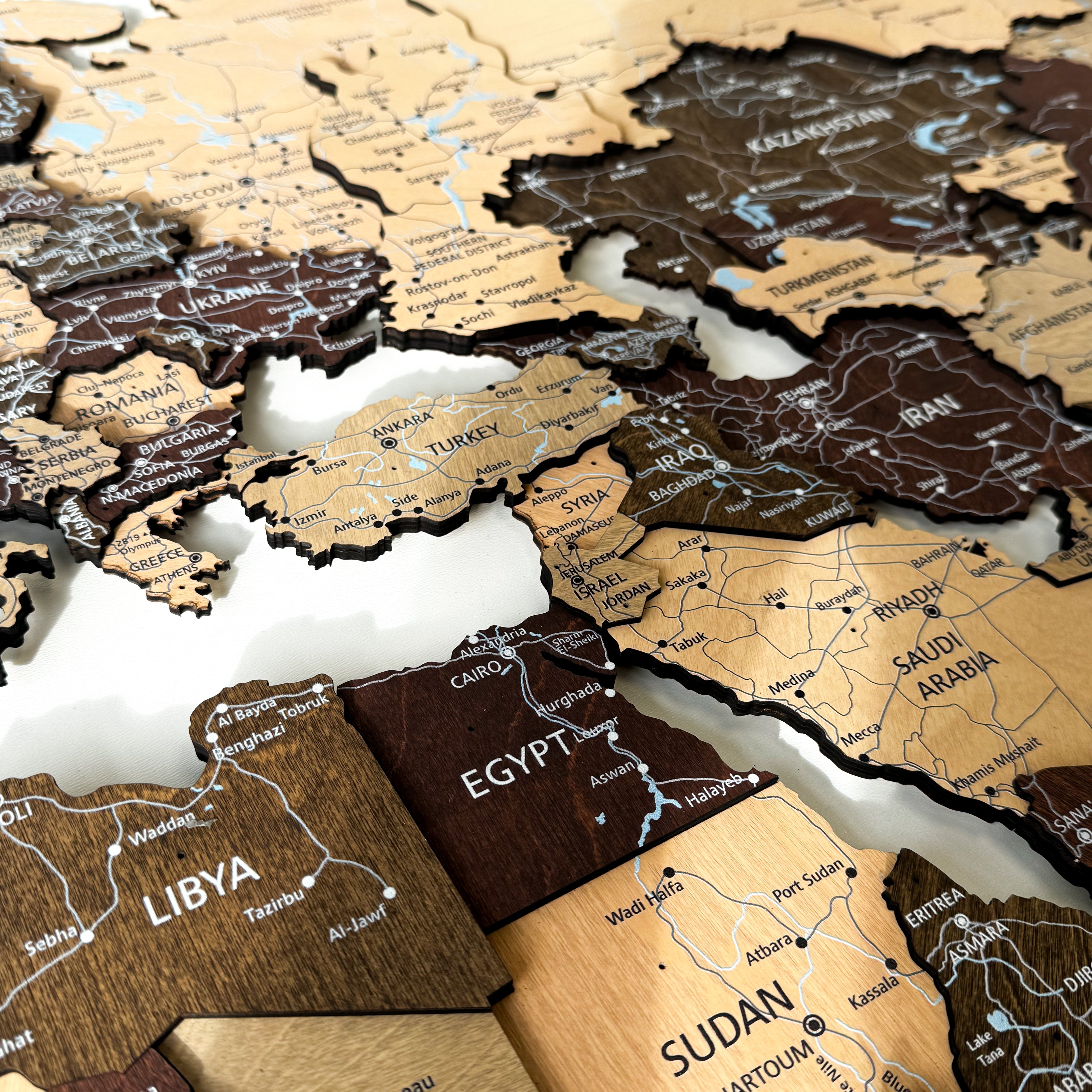
That is why our world maps include countries, capitals, many major cities, lakes, rivers, main roads, and islands. We want the map to look beautiful from across the room, but also feel interesting when you come closer.
This level of detail takes time. The names need to be readable. The geography needs to feel balanced. The colors need to work with the natural wood. The result should be decorative, but not empty.
We use high-quality plywood
The material is one of the most important parts of a wooden world map.
Many mass-market maps are made from MDF, HDF, or surfaces that only imitate wood. We take a different approach. KokoBolo maps are made from high-quality plywood, giving each piece a real wooden character and a warmer, more natural look.
Plywood is strong, stable, and visually rich. It gives the map a real material presence, which is especially important when the map is used as premium wall decor in a living room, bedroom, office, or travel-inspired space.
The plywood is carefully sanded
Before finishing or printing, the plywood surface needs to be prepared.
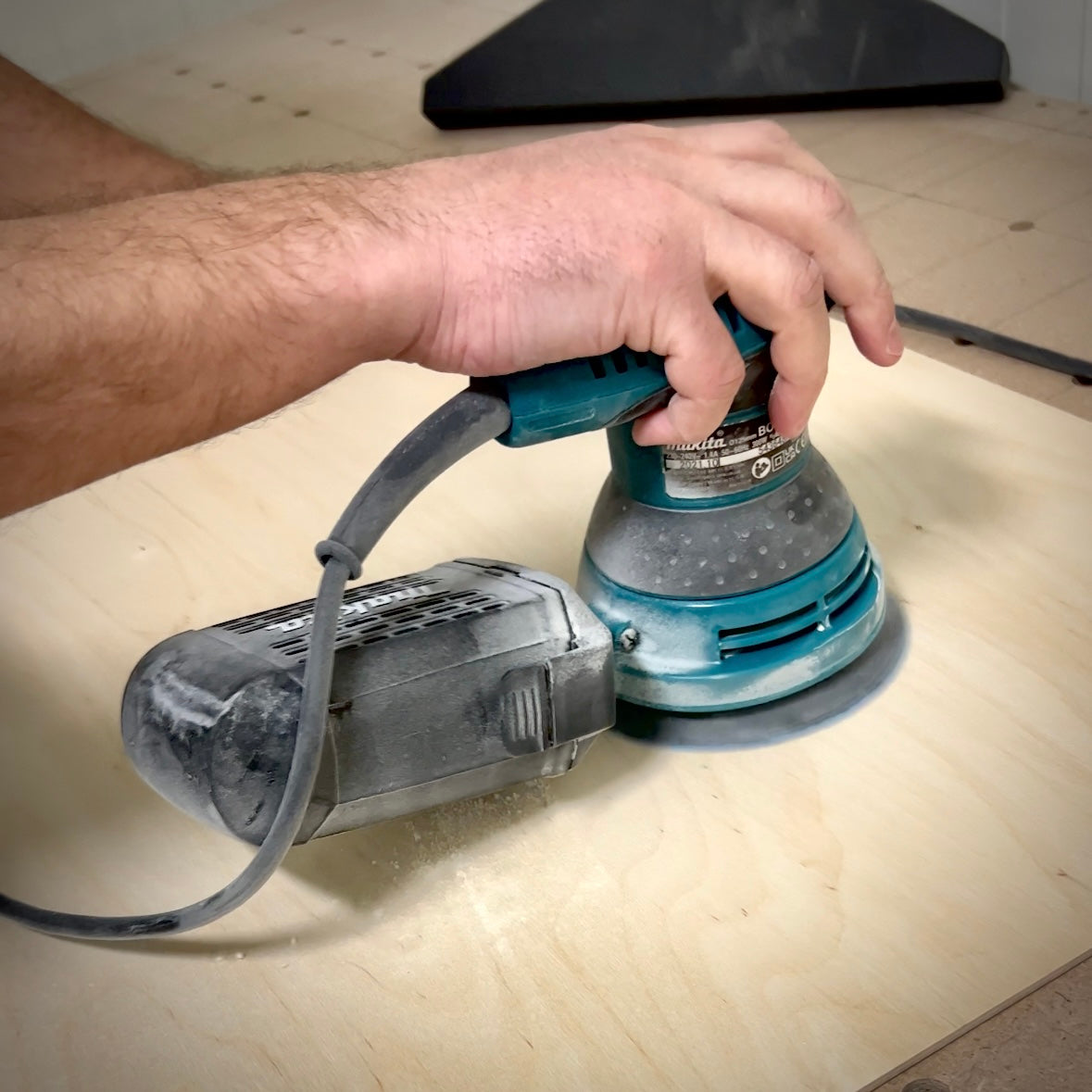
We carefully sand the wood to create a smooth and clean surface. This step may seem simple, but it affects the entire final result. A better surface helps the oil finish look more even and helps the printed details appear cleaner.
When you touch a finished wooden map, the quality of preparation is one of the things you can feel immediately.
The wood is finished with premium Osmo oil
After sanding, we finish the wood with premium German Osmo wood oil.
This is an important part of our process. The oil helps protect the wood surface and enriches the natural look of the plywood. It gives the material more warmth, depth, and character before the map design is printed.
We do not want the wood to feel raw or unfinished. A premium wooden world map should feel like a real interior decor piece, not just a cut wooden panel.
We print after the wood is prepared
The order of production matters.
At KokoBolo, we prepare the wood first. We sand it, finish it with oil, and only then apply the printed map design.
This helps us create a cleaner and more considered result. The wood is already protected and visually enriched before the detailed geography is added.
Detailed multi-pass UV printing
Printing is one of the details that makes our wooden maps different.
We use detailed multi-pass UV printing to apply the map design to the prepared wood surface. This allows us to print fine details such as country names, capitals, major cities, rivers, lakes, main roads, and islands.
Clear printing matters because a wooden world map should be enjoyable up close. It should not only look good in product photos. It should reward you with real detail when you stand near it.
We include more geographic detail
Many wooden maps simplify the world. They may show only country names, or they may remove small islands and fine details because they are difficult to produce.
We try to include much more.
Our maps include many major cities, blue lakes and rivers, main roads, and a large number of islands. These details help the map feel richer and more complete.
For people who love travel, geography, or meaningful wall decor, these small elements make the map more personal. You can discover places you have visited, places you dream about, and places you may never have noticed before.
Small islands take extra work
Small islands are one of the easiest things for manufacturers to leave out.
They are harder to cut, harder to print, harder to pack, and easier to lose during installation. But they are also part of the world, and they make the finished map feel much more complete.
At KokoBolo, we include many small and remote island groups that are often missing from simpler wooden maps. This takes more work, but it is one of the details that helps our maps feel more carefully made.
The 3D layers are carefully planned
A 3D wooden world map should not look random.
The height of the countries and regions needs to be planned so the map feels dimensional but still balanced. If the layers are not designed well, the map can look messy or visually confusing.
We pay attention to how countries transition between heights, how neighboring pieces work together, and how the overall composition looks on the wall.
The goal is to create depth without losing harmony.
Colors are designed to stay balanced
Color is another important part of the map.
Because every piece has a natural wooden surface, the printed colors need to work with the wood, not cover it completely. We try to keep the map readable and balanced, so neighboring countries do not visually blend together or create unnecessary confusion.
This helps the map stay decorative from far away and detailed up close.
A hidden backing creates a floating shadow
One of our favorite details is the hidden backing behind the map.
The backing is smaller than the visible map pieces, so when the map is mounted on the wall, it is not easily visible from the front. But it creates a small 3 mm distance between the map and the wall.
That small distance makes a big difference.
The map slightly floats away from the surface, creating a subtle shadow around the continents and islands. This shadow makes the 3D effect stronger and gives the whole piece a more premium look.
Every map is checked before packing
Before a map is packed, it needs to be checked.
We look at the printed details, the wooden pieces, the finish, the edges, and the overall quality. A wooden world map has many separate parts, so attention to detail is important at every stage.
Our goal is simple: when the customer opens the box, the product should feel special from the first moment.
Packaging matters too
A premium product needs careful packaging.
Wooden maps include large pieces, small pieces, islands, accessories, and installation elements. Everything needs to be organized and protected so the map arrives safely and feels good to unpack.
The experience should not feel like opening a random decoration. It should feel like opening a carefully made product.
Why this process matters
When you see a wooden world map online, it can be difficult to understand the difference between products at first glance.
But when you look closer, the differences become clear: the material, the finish, the printing, the amount of detail, the islands, the 3D layering, the shadow, and the overall feeling of the finished piece.
We believe these details matter because a wooden world map is not something you buy for one season. It is a piece of wall decor that can stay in your home or office for years.
Made for people who notice details
KokoBolo wooden world maps are made for people who notice details.
People who care about real wood. People who look closely at maps. People who appreciate travel, geography, interior design, and craftsmanship. People who want their wall decor to feel personal, warm, and meaningful.
That is why we spend time on the parts of the process that are easy to ignore but hard to replace.
Shop KokoBolo Wooden World Maps
FAQ
What are KokoBolo wooden world maps made from?
KokoBolo wooden world maps are made from high-quality plywood. The wood is carefully sanded, finished with premium German Osmo wood oil, and then printed with detailed UV printing.
Why do you finish the wood before printing?
We finish the wood before printing because the wood surface matters. Sanding and oil finishing help protect and enrich the plywood before the printed map details are added.
What makes the printing detailed?
Our maps use multi-pass UV printing, which allows us to include fine details such as country names, capitals, major cities, rivers, lakes, main roads, and islands.
Why are there so many small islands on KokoBolo maps?
Small islands make the map feel more complete. They are more difficult to produce and handle, but they add character, detail, and a more accurate feeling to the finished wooden world map.
What creates the floating shadow effect?
The floating shadow effect comes from a hidden 3 mm backing behind the map. It slightly lifts the map away from the wall, creating a subtle shadow and stronger 3D effect.
Is every wooden world map the same?
No. Wooden world maps can differ a lot in material, finish, printing, level of detail, number of islands, 3D structure, and overall craftsmanship.